News, events, articles, and other information relating to the Mid-Atlantic region of the US.
Showing posts with label chesapeake bay. Show all posts
Wednesday, January 9, 2019
Chesapeake Bay Foundation State of the Bay Report
The Chesapeake Bay Foundation's (CBF) biennial State of the Bay Report score decreased one point to 33, equivalent to a D+.
The lower score for 2018 was due mainly to increased pollution and poor water clarity caused by record regional rainfall.
"The good news is that scientists are pointing to evidence of the Bay's increased resiliency and ability to withstand, and recover from, these severe weather events. And this resiliency is a direct result of the pollution reductions achieved to date. In addition, we did see increases in scores for dissolved oxygen and Bay grasses since 2016, but the recovery is still fragile," said CBF's Director of Science and Agricultural Policy Beth McGee.
Established in 1998, CBF's State of the Bay Report is a comprehensive measure of the Bay's health. CBF scientists compile and examine the best available data and information for 13 indicators in three categories: pollution, habitat, and fisheries. CBF scientists assign each indicator an index score from 1-100. Taken together, these indicators offer an overall assessment of Bay health.
Dissolved oxygen and bay grasses improved. In the pollution category, toxics were unchanged, while water clarity, and nitrogen and phosphorus pollution were worse. In the habitat category, scores for bay grasses and resource lands improved, and buffers and wetlands remained the same. In the fisheries category, scores for oysters, crabs, and rockfish remained the same, while the score for shad declined.
This year's score is still far short of the goal to reach 40 by 2025 and ultimately a 70, which would represent a saved Bay. The unspoiled Bay ecosystem described by Captain John Smith in the 1600s, with its extensive forests and wetlands, clear water, abundant fish and oysters, and lush growths of submerged vegetation serves as the theoretical benchmark and would rate a 100 on CBF's scale.
The Clean Water Blueprint requires the Bay jurisdictions to decrease pollution to local creeks, rivers, and the Bay. State and local governments have committed to achieve specific, measurable reductions. The states agreed to have the 60 percent of the needed programs and practices in place by 2017, and to complete the job by 2025.
Of the primary Bay states, Virginia and Maryland were close to meeting the 2017 goals but need to accelerate pollution reduction from agriculture and urban/suburban runoff. Pennsylvania continues to be far short of its goals, mostly as a result of falling behind in addressing pollution from agriculture.
The full Chesapeake Bay Foundation 2018 State of the Bay Report can be accessed at: http://www.cbf.org/document-library/cbf-reports/2018-state-of-the-bay-report.pdf
source: Chesapeake Bay Foundation
Tuesday, April 25, 2017
Chesapeake Bay Blues Festival 2017
This year's Chesapeake Bay Blues Festival will be held May 20th & 21st, 2017 at Sandy Point State Park near Annapolis, Maryland. The net proceeds from this show will go to help local charities.
2017 Chesapeake Bay Blues Festival Festival Lineup:
Saturday
The Mavericks
The Fabulous Thunderbirds
Walter Trout
Samantha Fish
Toronzo Cannon
Frank Bang and the Cook County Kings
Sweet Leda
Sunday:
Jonny Lang
Robert Randolph and the
Family Band
Ana Popovic
The William Bell Band
Mississippi Blues Child Mr. Sipp
The Apocalypse Blues Revue
Swamp Candy
Tickets are on sale now at www.bayblues.org.
2017 Chesapeake Bay Blues Festival Festival Lineup:
Saturday
The Mavericks
The Fabulous Thunderbirds
Walter Trout
Samantha Fish
Toronzo Cannon
Frank Bang and the Cook County Kings
Sweet Leda
Sunday:
Jonny Lang
Robert Randolph and the
Family Band
Ana Popovic
The William Bell Band
Mississippi Blues Child Mr. Sipp
The Apocalypse Blues Revue
Swamp Candy
Tickets are on sale now at www.bayblues.org.
Labels:
annapolis,
art,
beaches,
chesapeake bay,
concerts,
events,
festivals,
maryland,
music,
state parks,
things to do
Thursday, January 14, 2016
Delmarva Birding Weekend 2016
Delmarva Birding Weekend
January 29 - January 31, 2016
The annual Delmarva Birding Winter Weekend celebrates songbirds, shorebirds, waterfowl, and raptors that are seen on the Delmarva Peninsula.
January 29 - January 31, 2016
![]() |
| Oystercatchers |
Winter Weekend activities include boat and hiking trips with a special emphasis on winter birds.
The Delmarva Peninsula possesses an extensive variety of environments, including barrier islands, tidal wetlands, cypress swamps, upland fields and primeval forests.
Field trips take place in the land and water that feed into the Chesapeake and Delaware Bays, and the Atlantic coastal bays. More than 400 bird species have been recorded in the region.
For more information, visit www.delmarvabirding.com
The Delmarva Peninsula possesses an extensive variety of environments, including barrier islands, tidal wetlands, cypress swamps, upland fields and primeval forests.
Field trips take place in the land and water that feed into the Chesapeake and Delaware Bays, and the Atlantic coastal bays. More than 400 bird species have been recorded in the region.
For more information, visit www.delmarvabirding.com
Saturday, June 29, 2013
Little Patuxent Restoration Grants
The Chesapeake and Atlantic Coastal Bays Trust Fund has awarded a $1 million grant to the Chesapeake Bay Foundation for restoration projects in the Little Patuxent watershed.
The funding will go towards wetland and stream restoration projects at the Sunrise-Navy Dairy Farm in Gambrills. The project will include planting trees along 20 acres of stream to filter polluted runoff, clean and enhance wetlands, and restore nearly 7,000 linear feet of stream.
source: Maryland Department of Natural Resources
The funding will go towards wetland and stream restoration projects at the Sunrise-Navy Dairy Farm in Gambrills. The project will include planting trees along 20 acres of stream to filter polluted runoff, clean and enhance wetlands, and restore nearly 7,000 linear feet of stream.
source: Maryland Department of Natural Resources
Saturday, October 6, 2012
Harris Creek Oyster Sanctuary
During the 2012 season, Maryland initiated oyster plantings aimed at fulfilling the goals set by federal agencies to restore oyster habitat and populations in 20 Bay tributaries by 2025.
Workers deployed 634 million spat on shell in Maryland’s portion of the Chesapeake Bay, with most of those deployed into the Harris Creek oyster sanctuary.
The effort involved the Oyster Recovery Partnership (ORP), the University of Maryland Horn Point Lab Hatchery (UMD HPL), along with the Maryland Department of Natural Resources (DNR), the National Oceanic and Atmospheric Administration (NOAA), and the Army Corps of Engineers Baltimore District
Nearly one third of the 360 acre goal in Harris Creek has been planted with enhanced substrate and spat on shell. In addition, portions of the Upper Bay were restocked with oysters after last year’s wide-scale mortality from excessive fresh water.
Harris Creek, a tributary of the Choptank River, is the first river targeted for large-scale, tributary-based oyster restoration. This area was chosen collaboratively by Maryland DNR, Army Corps Baltimore District and NOAA because of its high likelihood to succeed. Construction of the Harris Creek oyster sanctuary is funded primarily by Maryland DNR, the Army Corps and NOAA.
source: Oyster Recovery Partnership
Workers deployed 634 million spat on shell in Maryland’s portion of the Chesapeake Bay, with most of those deployed into the Harris Creek oyster sanctuary.
The effort involved the Oyster Recovery Partnership (ORP), the University of Maryland Horn Point Lab Hatchery (UMD HPL), along with the Maryland Department of Natural Resources (DNR), the National Oceanic and Atmospheric Administration (NOAA), and the Army Corps of Engineers Baltimore District
Nearly one third of the 360 acre goal in Harris Creek has been planted with enhanced substrate and spat on shell. In addition, portions of the Upper Bay were restocked with oysters after last year’s wide-scale mortality from excessive fresh water.
Harris Creek, a tributary of the Choptank River, is the first river targeted for large-scale, tributary-based oyster restoration. This area was chosen collaboratively by Maryland DNR, Army Corps Baltimore District and NOAA because of its high likelihood to succeed. Construction of the Harris Creek oyster sanctuary is funded primarily by Maryland DNR, the Army Corps and NOAA.
source: Oyster Recovery Partnership
Monday, July 2, 2012
Chesapeake Bay Diamond Jim Rockfish
The Diamond Jim component of the 2012 Maryland Fishing Challenge entered its second phase when Maryland Department of Natural Resources (DNR) biologists caught, tagged and released more than 100 striped bass into the Chesapeake Bay.
One of the tagged fish is the official Diamond Jim. The other tagged rockfish will be known as imposters worth at least $500 each if caught and registered before September 3, 2012.
Over the summer, as many as 600 imposters worth at least $500 each and one genuine Diamond Jim will be pursued by anglers. Each month Diamond Jim goes uncaught the bounty increases - from $10,000 in June, to $20,000 in July, and $25,000 in August.
The contest features a guaranteed $25,000 payout: If one of the three authentic Diamond Jims is not caught by Labor Day, the cash prize will be split equally among the anglers who catch imposters this summer.
Additionally, if an angler catches the August Diamond Jim they will receive a set of one-carat total weight, round, brilliant diamond stud earrings from Zachary’s Jewelers in Annapolis. Zachary’s is also providing five- to six-carat blue topaz charms for anglers who catch imposter fish.
Anglers who catch and register any of the more than 80 Maryland Angler Award eligible sport fish species categories will receive certificates of achievement and free passes to the Maryland Fishing Challenge Finale, which will be held in conjunction with the Maryland Seafood Festival at Sandy Point State Park on September 8, 2012.
The Celebration will include chances to win a boat, trailer and motor package from Tracker Marine, a tropical vacation package from the World Fishing Network, tackle packages from Bill’s Outdoor Center and Bass Pro Shops and collectable Maryland Fishing Challenge shirts from Under Armour.
This year’s challenge honors the life and times of world renowned fly-fishing legend Lefty Kreh. Over his remarkable 75-year career the Maryland native has shared his enthusiasm and skill for fishing through his columns, books and presentations.
The Maryland Fishing Challenge runs annually from Labor Day through the day before the following Labor Day. To be eligible for the contest, all fish must be caught recreationally by rod and reel. To see the Angler Award species list and the official Maryland Fishing Challenge and Diamond Jim contest rules, visit dnr.maryland.gov/fisheries/challenge.
source: MD DNR
One of the tagged fish is the official Diamond Jim. The other tagged rockfish will be known as imposters worth at least $500 each if caught and registered before September 3, 2012.
Over the summer, as many as 600 imposters worth at least $500 each and one genuine Diamond Jim will be pursued by anglers. Each month Diamond Jim goes uncaught the bounty increases - from $10,000 in June, to $20,000 in July, and $25,000 in August.
The contest features a guaranteed $25,000 payout: If one of the three authentic Diamond Jims is not caught by Labor Day, the cash prize will be split equally among the anglers who catch imposters this summer.
Additionally, if an angler catches the August Diamond Jim they will receive a set of one-carat total weight, round, brilliant diamond stud earrings from Zachary’s Jewelers in Annapolis. Zachary’s is also providing five- to six-carat blue topaz charms for anglers who catch imposter fish.
Anglers who catch and register any of the more than 80 Maryland Angler Award eligible sport fish species categories will receive certificates of achievement and free passes to the Maryland Fishing Challenge Finale, which will be held in conjunction with the Maryland Seafood Festival at Sandy Point State Park on September 8, 2012.
The Celebration will include chances to win a boat, trailer and motor package from Tracker Marine, a tropical vacation package from the World Fishing Network, tackle packages from Bill’s Outdoor Center and Bass Pro Shops and collectable Maryland Fishing Challenge shirts from Under Armour.
This year’s challenge honors the life and times of world renowned fly-fishing legend Lefty Kreh. Over his remarkable 75-year career the Maryland native has shared his enthusiasm and skill for fishing through his columns, books and presentations.
The Maryland Fishing Challenge runs annually from Labor Day through the day before the following Labor Day. To be eligible for the contest, all fish must be caught recreationally by rod and reel. To see the Angler Award species list and the official Maryland Fishing Challenge and Diamond Jim contest rules, visit dnr.maryland.gov/fisheries/challenge.
source: MD DNR
Tuesday, May 8, 2012
Harris Creek Oyster Restoration
Harris Creek, a tributary of the Choptank River, will be the site for the first large-scale, tributary-based oyster restoration project in the Chesapeake Bay watershed.
Harris creek was chosen by the Maryland Department of Natural Resources (DNR), Army Corps Baltimore District, and the National Oceanic and Atmospheric Administration (NOAA) because of its high likelihood to succeed. The same team is developing a scientific “blueprint” to guide restoration in the creek.
The project will include the planting of oysters on nearly 100 acres in 2012, with a long term goal of restoring 300-600 acres. The Army Corps is also scheduled to plant 20 acres of new shell and stone substrate to enhance the river bottom to support the new oyster reefs.
If current funding levels continue, the restoration project should take between 2-5 years to complete. Funds for these restoration activities are provided primarily by DNR, the Army Corps and NOAA.
source: MD DNR
Harris creek was chosen by the Maryland Department of Natural Resources (DNR), Army Corps Baltimore District, and the National Oceanic and Atmospheric Administration (NOAA) because of its high likelihood to succeed. The same team is developing a scientific “blueprint” to guide restoration in the creek.
The project will include the planting of oysters on nearly 100 acres in 2012, with a long term goal of restoring 300-600 acres. The Army Corps is also scheduled to plant 20 acres of new shell and stone substrate to enhance the river bottom to support the new oyster reefs.
If current funding levels continue, the restoration project should take between 2-5 years to complete. Funds for these restoration activities are provided primarily by DNR, the Army Corps and NOAA.
source: MD DNR
Tuesday, February 14, 2012
Chesapeake Bay Oyster Restoration Master Plan Public Meetings
In April, the U.S. Army Corps of Engineers (USACE) will hold public meetings around the Chesapeake Bay to discuss plans to restore native oyster populations in the watershed.
During public meetings, audiences will have opportunities to ask questions and provide feedback. Members of the Norfolk and Baltimore district's oyster teams will be present at all meetings.
USACE will also be using Social Media via Facebook (http://www.facebook.com/NAOonFB). Questions posted during the meeting(s) will be shared and discussed at the public meetings and responses will be posted on Facebook.
People can also email questions and comments prior to the meetings to: NativeOysterRestMasterPlan@usace.army.mil.
The Native Oyster Restoration Master Plan is the U.S. Army Corps of Engineers' plan for large-scale, science-based oyster restoration throughout the Chesapeake Bay and its tributaries.
Public meeting dates and locations are:
April 10 from 3-8PM
The Philip Merrill Environmental Center (Chesapeake Bay Foundation)
6 Herndon Ave., Annapolis MD 21403
April 19 from 3-8PM
Chesapeake College (Route 50)
1000 College Circle, Wye Mills MD 21679
April 17 from 4-9PM
Thomas Nelson Community College
99 Thomas Nelson Drive, Hampton VA 23666
source: U.S. Army Corps of Engineers
During public meetings, audiences will have opportunities to ask questions and provide feedback. Members of the Norfolk and Baltimore district's oyster teams will be present at all meetings.
USACE will also be using Social Media via Facebook (http://www.facebook.com/NAOonFB). Questions posted during the meeting(s) will be shared and discussed at the public meetings and responses will be posted on Facebook.
People can also email questions and comments prior to the meetings to: NativeOysterRestMasterPlan@usace.army.mil.
The Native Oyster Restoration Master Plan is the U.S. Army Corps of Engineers' plan for large-scale, science-based oyster restoration throughout the Chesapeake Bay and its tributaries.
Public meeting dates and locations are:
April 10 from 3-8PM
The Philip Merrill Environmental Center (Chesapeake Bay Foundation)
6 Herndon Ave., Annapolis MD 21403
April 19 from 3-8PM
Chesapeake College (Route 50)
1000 College Circle, Wye Mills MD 21679
April 17 from 4-9PM
Thomas Nelson Community College
99 Thomas Nelson Drive, Hampton VA 23666
source: U.S. Army Corps of Engineers
Friday, February 10, 2012
Green Streets - Green Jobs - Green Towns Grants
On February 8, 2012, the Chesapeake Bay Trust, U.S. Environmental Protection Agency, and the state of Maryland unveiled an expanded Green Streets-Green Jobs-Green Towns grant initiative. The initiative is intended to help cities and towns in the Chesapeake Bay watershed accelerate greening efforts that improve watershed protection, community livability, and economic vitality.
The grant program is open to local governments and non-profit organizations in urban and suburban watersheds in the Chesapeake Bay region of Maryland, D.C., Delaware, Pennsylvania, Virginia and West Virginia who are interested in pursuing green streets, green infrastructure, and green jobs as part of their community or watershed planning.
Grant assistance up to $35,000 is available for infrastructure project planning and design, and up to $100,000 for implementation and construction. The strongest proposals will incorporate innovative green infrastructure and best management practices that maximize cost-effectiveness.
Projects selected will enhance sustainable watershed protection and green infrastructure stormwater management through low impact development practices, renewable energy use, local livability and green job creation. The request for proposals is available at www.cbtrust.org with a deadline of March 9, 2012 for all applications.
The Green Streets-Green Jobs-Green Towns grant initiative will award more than $400,000 in 2012, double the funding from 2011. For more information on the Green Streets grant program please visit cbtrust.org.
source: Chesapeake Bay Trust
The grant program is open to local governments and non-profit organizations in urban and suburban watersheds in the Chesapeake Bay region of Maryland, D.C., Delaware, Pennsylvania, Virginia and West Virginia who are interested in pursuing green streets, green infrastructure, and green jobs as part of their community or watershed planning.
Grant assistance up to $35,000 is available for infrastructure project planning and design, and up to $100,000 for implementation and construction. The strongest proposals will incorporate innovative green infrastructure and best management practices that maximize cost-effectiveness.
Projects selected will enhance sustainable watershed protection and green infrastructure stormwater management through low impact development practices, renewable energy use, local livability and green job creation. The request for proposals is available at www.cbtrust.org with a deadline of March 9, 2012 for all applications.
The Green Streets-Green Jobs-Green Towns grant initiative will award more than $400,000 in 2012, double the funding from 2011. For more information on the Green Streets grant program please visit cbtrust.org.
source: Chesapeake Bay Trust
Tuesday, September 6, 2011
Mid Atlantic Icons
The Mid Atlantic is represented by a number of cultural icons. Many of the region's icons are influenced by marine culture, including fishing, boating,
seafood, and other subjects. Included below are just a small sample of the many icons that are popular in the Mid Atlantic region.
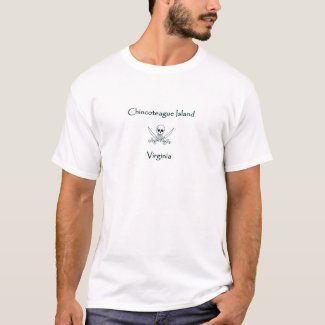
Chincoteague Island is one of the area's favorite destinations.
The Outer Banks of North Carolina is said to have been a stronghold for pirates. Numerous local legends, ghost stories, and pirate books have made the "jolly roger" logo an icon of the region.
Chincoteague Island is one of the area's favorite destinations.
The Outer Banks of North Carolina is said to have been a stronghold for pirates. Numerous local legends, ghost stories, and pirate books have made the "jolly roger" logo an icon of the region.
Monday, August 22, 2011
Reef Balls Placed in Choptank River Oyster Reef
The Maryland Department of Natural Resources Artificial Reef Program joined the Chesapeake Bay Foundation (CBF) on August 11 to place 306 oyster spat-laden reef balls on a two-acre site near Cooks Point in the Choptank River.
Volunteers from CBF and the Dorchester County chapter of the Maryland Saltwater Sportfishermen’s Association (MSSA) built the reef balls at the Oyster Restoration Center in Shady Side, Md. and at a private site on the Eastern Shore. West Marine and NOAA provided grant support for building the reef balls and setting the spat.
Reef balls add three-dimensional structure and habitat for aquatic organisms such as mussels, oysters, tunicates, marine worms and myriad other species, which are vital components of the Chesapeake Bay’s food chain.
Once established, striped bass, flounder, croaker, spot, sea bass and other saltwater fish species utilize oyster habitats for food and shelter.
For more information on Maryland’s artificial reef initiative, visit dnr.state.md.us/fisheries/reefs/ or the Chesapeake Bay Foundation’s restoration efforts go to cbf.org
source: MD DNR
Volunteers from CBF and the Dorchester County chapter of the Maryland Saltwater Sportfishermen’s Association (MSSA) built the reef balls at the Oyster Restoration Center in Shady Side, Md. and at a private site on the Eastern Shore. West Marine and NOAA provided grant support for building the reef balls and setting the spat.
Reef balls add three-dimensional structure and habitat for aquatic organisms such as mussels, oysters, tunicates, marine worms and myriad other species, which are vital components of the Chesapeake Bay’s food chain.
Once established, striped bass, flounder, croaker, spot, sea bass and other saltwater fish species utilize oyster habitats for food and shelter.
For more information on Maryland’s artificial reef initiative, visit dnr.state.md.us/fisheries/reefs/ or the Chesapeake Bay Foundation’s restoration efforts go to cbf.org
source: MD DNR
Wednesday, August 17, 2011
Chesapeake Bay Smart Buoys
A new NOAA "smart buoy" deployed near the Chesapeake Bay Bridge-Tunnel will help boaters and fishermen monitor conditions in the Chesapeake Bay.
The highly sophisticated buoy is the newest addition to NOAA's Chesapeake Bay Interpretive Buoy System (CBIBS), a network of buoys that transmit multi-use oceanographic and meteorological data from the bay to weather forecasters, maritime safety personnel, coastal decision makers, and recreational boaters and fishermen.
Managed by NOAA’s Chesapeake Bay Office, CBIBS buoys collect weather, oceanographic and water-quality observations and transmit this data wirelessly in near-real time.
Data and related educational resources can be accessed at http://buoybay.noaa.gov (http://www.buoybay.noaa.gov/m for mobile devices) and by toll-free phone at 877-BUOY-BAY (877-286-9229).
The information is also available via free Android and iPhone applications. CBIBS uses new technology to make information available for a broad range of research, commercial, and recreational purposes, including assessing the progress of bay restoration.
The other nine buoys in the network are located at the mouths of the Susquehanna, Patapsco, Severn, Potomac, and Rappahannock Rivers; in the main stem of the bay near Calvert County, Md.; in the Potomac River near Alexandria, Va.; in the James River near Jamestown; and in the Elizabeth River off Norfolk.
source: NOAA
The highly sophisticated buoy is the newest addition to NOAA's Chesapeake Bay Interpretive Buoy System (CBIBS), a network of buoys that transmit multi-use oceanographic and meteorological data from the bay to weather forecasters, maritime safety personnel, coastal decision makers, and recreational boaters and fishermen.
Managed by NOAA’s Chesapeake Bay Office, CBIBS buoys collect weather, oceanographic and water-quality observations and transmit this data wirelessly in near-real time.
Data and related educational resources can be accessed at http://buoybay.noaa.gov (http://www.buoybay.noaa.gov/m for mobile devices) and by toll-free phone at 877-BUOY-BAY (877-286-9229).
The information is also available via free Android and iPhone applications. CBIBS uses new technology to make information available for a broad range of research, commercial, and recreational purposes, including assessing the progress of bay restoration.
The other nine buoys in the network are located at the mouths of the Susquehanna, Patapsco, Severn, Potomac, and Rappahannock Rivers; in the main stem of the bay near Calvert County, Md.; in the Potomac River near Alexandria, Va.; in the James River near Jamestown; and in the Elizabeth River off Norfolk.
source: NOAA
Tuesday, August 9, 2011
2011 Chesapeake Bay Blue Crab Assessment
A new National Oceanic and Atmospheric Administration (NOAA) scientific assessment of the Chesapeake Bay’s blue crab stock has been released, setting higher abundance thresholds and crab population targets.
According to the National Oceanic and Atmospheric Administration assessment, the Chesapeake Bay Blue Crab population indicates significantly more work needs to be done to fully rebuild the stock to sustainable levels.
The study concludes that although the stock has increased substantially in response to three years of rebuilding efforts by Virginia, Maryland and the Potomac River Fisheries Commission, the stock was more depleted than originally believed and will take longer to rebuild than had been expected.
The assessment sets a new overfishing threshold as well as a new safe abundance level for female crabs. According to NOAA, the project took three years to complete and represents the best available science on the stock’s reproductive capabilities, lifespan, gender and size distributions.
Until now, fishery managers used an interim target of 200 million total adult crabs in the bay as the threshold of a healthy stock and considered overfishing to occur if 53 percent of adult (age 1+) crabs were harvested in a year. Regulations were established to meet these benchmarks, which were based on 2005 bay-wide crab assessment data.
The new stock assessment sets a new healthy-species abundance level of 215 million female crabs, with overfishing occurring if 34 percent of the female crabs are harvested in a year.
Put into context, this means that fishery managers have only come close to achieving this level of female abundance three times over the past 22 years, in 2010, 1993 and 1991.
These more stringent assessments of the stock’s health will allow fishery managers to set more precise female harvest limits in order to fully rebuild the stock. Virginia, Maryland and the PRFC remain committed to working together to rebuild the bay’s crab population to meet the new female population threshold and abundance target.
In September the Chesapeake Bay Stock Assessment Committee will meet to consider the new assessment, examine data from the past two years and provide management recommendations to Maryland, Virginia and the Potomac River Fisheries Commission.
The bay-wide crab harvest in 2010 was in the 90 million-pound range, confirming that a healthy harvesting industry can coexist with regulations designed to rebuild a self-sustaining, healthy blue crab population.
Through a historic collaboration in 2008, Maryland, Virginia and the Potomac River Fisheries Commission took strong, coordinated action to reduce harvest pressure on female crabs by 34 percent. At that time, scientists deemed conservation measures necessary as blue crab suffered near historic lows in spawning stock.
Dr. Tom Miller, University of Maryland Center for Environmental Science, lead author of the stock assessment commented on the assessment, stating: "Overall, crabs in the bay are doing well. Implementing recommendations developed in the stock assessment, like focusing fishing regulations on female crabs, will help even more,"
The stock assessment can be viewed in its entirety at: http://hjort.cbl.umces.edu/crabs/Assessment.html
source: Virginia Marine Resources Commission/Maryland Department of Natural Resources
According to the National Oceanic and Atmospheric Administration assessment, the Chesapeake Bay Blue Crab population indicates significantly more work needs to be done to fully rebuild the stock to sustainable levels.
The study concludes that although the stock has increased substantially in response to three years of rebuilding efforts by Virginia, Maryland and the Potomac River Fisheries Commission, the stock was more depleted than originally believed and will take longer to rebuild than had been expected.
The assessment sets a new overfishing threshold as well as a new safe abundance level for female crabs. According to NOAA, the project took three years to complete and represents the best available science on the stock’s reproductive capabilities, lifespan, gender and size distributions.
Until now, fishery managers used an interim target of 200 million total adult crabs in the bay as the threshold of a healthy stock and considered overfishing to occur if 53 percent of adult (age 1+) crabs were harvested in a year. Regulations were established to meet these benchmarks, which were based on 2005 bay-wide crab assessment data.
The new stock assessment sets a new healthy-species abundance level of 215 million female crabs, with overfishing occurring if 34 percent of the female crabs are harvested in a year.
Put into context, this means that fishery managers have only come close to achieving this level of female abundance three times over the past 22 years, in 2010, 1993 and 1991.
These more stringent assessments of the stock’s health will allow fishery managers to set more precise female harvest limits in order to fully rebuild the stock. Virginia, Maryland and the PRFC remain committed to working together to rebuild the bay’s crab population to meet the new female population threshold and abundance target.
In September the Chesapeake Bay Stock Assessment Committee will meet to consider the new assessment, examine data from the past two years and provide management recommendations to Maryland, Virginia and the Potomac River Fisheries Commission.
The bay-wide crab harvest in 2010 was in the 90 million-pound range, confirming that a healthy harvesting industry can coexist with regulations designed to rebuild a self-sustaining, healthy blue crab population.
Through a historic collaboration in 2008, Maryland, Virginia and the Potomac River Fisheries Commission took strong, coordinated action to reduce harvest pressure on female crabs by 34 percent. At that time, scientists deemed conservation measures necessary as blue crab suffered near historic lows in spawning stock.
Dr. Tom Miller, University of Maryland Center for Environmental Science, lead author of the stock assessment commented on the assessment, stating: "Overall, crabs in the bay are doing well. Implementing recommendations developed in the stock assessment, like focusing fishing regulations on female crabs, will help even more,"
The stock assessment can be viewed in its entirety at: http://hjort.cbl.umces.edu/crabs/Assessment.html
source: Virginia Marine Resources Commission/Maryland Department of Natural Resources
Saturday, June 18, 2011
Chesapeake Region Native Plant Center
A new online portal, the Native Plant Center for the Chesapeake Bay Region, allows for the identification and selection of native plant species for habitat restoration in the Chesapeake Bay watershed.
Users to the portal, www.nativeplantcenter.net, can search for native plants by name, plant type, sun exposure, soil texture and moisture, and even find native plants with the same shape, color, size or other characteristics as some of their favorite non-native plants.
The portal also includes a geo-locator feature to identify plants suited to a user’s specific location. An online network for interacting with other Chesapeake Bay stewards is planned.
The portal uses the U.S Fish and Wildlife Service’s native plant database, associated with the publication entitled Native Plants for Wildlife Habitat and Conservation Landscaping: Chesapeake Bay Watershed.
The Alliance for the Chesapeake Bay, with support from the U.S. Fish and Wildlife Service, contracted with Image Matters LLC to create an online version of the guide, the Native Plants Center, Chesapeake Region.
Users to the portal, www.nativeplantcenter.net, can search for native plants by name, plant type, sun exposure, soil texture and moisture, and even find native plants with the same shape, color, size or other characteristics as some of their favorite non-native plants.
The portal also includes a geo-locator feature to identify plants suited to a user’s specific location. An online network for interacting with other Chesapeake Bay stewards is planned.
The portal uses the U.S Fish and Wildlife Service’s native plant database, associated with the publication entitled Native Plants for Wildlife Habitat and Conservation Landscaping: Chesapeake Bay Watershed.
The Alliance for the Chesapeake Bay, with support from the U.S. Fish and Wildlife Service, contracted with Image Matters LLC to create an online version of the guide, the Native Plants Center, Chesapeake Region.
Thursday, June 9, 2011
NOAA Chesapeake Bay Office Biennial Report for 2009 - 2010
The NOAA Chesapeake Bay Office submitted its Biennial Report for fiscal years 2009 and 2010 to Congress in early May 2011.
The report highlights many of NCBO’s programs and projects, including recent actions in support of implementing the President's Executive Order on Chesapeake Bay Protection and Restoration.
The document describes the Office’s work, including:
- Monitoring the Bay's health, improving boater safety, and interpreting the John Smith water trail through operation and maintenance of the Chesapeake Bay Interpretive Buoy System;
- Surveying bottom habitat to collaborate with state and other partners in identifying prime locations for oyster restoration, sturgeon spawning habitat restoration, and derelict crab pot removal efforts;
- Developing decision-support models for fisheries managers to evaluate different management options;
- Providing states with funding, technical assistance, and data to restore native oysters in the Bay, including support for aquaculture efforts;
- Improving blue crab management by providing key blue crab data and survey information to marine resource managers;
- Providing hands-on learning as part of the Bay Watershed Education and Training (B-WET) Chesapeake Program;
- Creating a new Environmental Science Training Center for environmental education professionals; and much more.
For more information, see: http://www.chesapeakebay.noaa.gov/
The report highlights many of NCBO’s programs and projects, including recent actions in support of implementing the President's Executive Order on Chesapeake Bay Protection and Restoration.
The document describes the Office’s work, including:
- Monitoring the Bay's health, improving boater safety, and interpreting the John Smith water trail through operation and maintenance of the Chesapeake Bay Interpretive Buoy System;
- Surveying bottom habitat to collaborate with state and other partners in identifying prime locations for oyster restoration, sturgeon spawning habitat restoration, and derelict crab pot removal efforts;
- Developing decision-support models for fisheries managers to evaluate different management options;
- Providing states with funding, technical assistance, and data to restore native oysters in the Bay, including support for aquaculture efforts;
- Improving blue crab management by providing key blue crab data and survey information to marine resource managers;
- Providing hands-on learning as part of the Bay Watershed Education and Training (B-WET) Chesapeake Program;
- Creating a new Environmental Science Training Center for environmental education professionals; and much more.
For more information, see: http://www.chesapeakebay.noaa.gov/
Wednesday, May 25, 2011
The Chesapeake Bay Environmental Controversy
The bay originates in Pennsylvania, as part of the Susquehanna River. It passes thru Maryland and Virginia, emptying into the Atlantic near Hampton Roads Virginia.
The estuary is an icon of North America and a vital component of the Mid Atlantic region. For centuries, men have fought over the Chesapeake Bay. During the last decade, several controversies have involved environmental issues.
Few people dispute the state of the bay. Silt, runoff, excessive nutrients and other pollution has led to massive degradation of the estuary. At issue is not what is wrong, but where the faults lie and how to correct them. Years of lawsuits, studies and media coverage have so far been ineffective at achieving Chesapeake Bay restoration.
On May 25, 2011, A coalition of environmental groups announced that they have filed a motion in federal court to oppose the efforts of major national agricultural organizations to force an end to federal and state programs to reduce pollution and restore the Chesapeake Bay.
The coalition includes the Chesapeake Bay Foundation, Citizens for Pennsylvania’s Future, Defenders of Wildlife, the Jefferson County Public Service District, the Midshore Riverkeeper Conservancy, and the National Wildlife Federation.
Within days after the federal government announced scientific pollution limits and the states laid out specific plans to reduce pollution in local rivers, streams, and the Chesapeake Bay, the American Farm Bureau Federation and the Pennsylvania Farm Bureau went to federal court in Pennsylvania to stop those efforts.
They have since been joined by other national agricultural lobbying groups, including the Fertilizer Institute, the National Pork Producers Council, the National Corn Growers Association, the National Chicken Council, the U.S. Poultry and Egg Association, and the National Turkey Federation.
"Just as the Bay is making progress in its long fight to survive, these big money industry lobbyists are trying to derail the process. Why? A simple profit motive," said Chesapeake Bay Foundation President William C. Baker. "They want the rest of us to suffer dirty and dangerous water so they can maximize their corn, hog, and poultry profit."
For decades, science has known that nitrogen and phosphorus pollution are responsible for the dead zones, fish kills, and harmful algal blooms that annually plague the Chesapeake Bay. Under the Clean Water Act, and as the result of numerous court cases, a scientific limit, or TMDL (Total Maximum Daily Load), has been set.
State governments then developed plans designed to ensure that all pollution control measures needed to fully restore the Bay and its tidal rivers are in place by 2025, with at least 60 percent of the actions completed by 2017. Science set the limits, and the states designed individual plans to achieve the goals.
"This lawsuit is a frivolous attack by polluters against the Chesapeake Bay’s rivers and streams, the source of drinking water for millions and an economic engine for the region." said the National Wildlife Federation’s Mid-Atlantic Regional Executive Director Tony Caliguiri. "In these economic times it’s appalling that taxpayer money is being spent to defend clean water in local communities against polluters. Responsible local leaders are working hard to set pollution limits for their communities and polluters would rather sue rather than be accountable."
Opponents of the pollution limits claim that EPA is overstepping its authority, and wants the process to start all over again.
"The Farm Bureau’s lawsuit is just another attempt to delay federal action," said Brian Glass, senior attorney for Citizens for Pennsylvania’s Future (PennFuture). "This delay will harm the very people the Bureau purports to represent, endangering farms that need a fresh and clean water supply, and preventing farmers from getting the help they need to protect their own land and waters."
Note: Portions of this article originate from a joint press release published by the Chesapeake Bay Foundation, Defenders of Wildlife, Midshore Riverkeeper Conservancy, National Wildlife Federation & Penn Future
Tuesday, April 19, 2011
2011 Chesapeake Bay Crab Survey
The states of Maryland and Virginia have released results of the 2011 Chesapeake Bay Blue Crab Winter Dredge Survey.
The study found that the Chesapeake Bay’s blue crab population is above the target for the third year in a row. Overall crab abundance declined due to cold winter weather that killed as many as 31 percent of Maryland’s adult crabs, compared to about 11 percent in 2010.
The Chesapeake Bay’s blue crab population is estimated to be 460 million crabs, nearly double the record low of 249 million in 2007. During 2010, Chesapeake Bay watermen harvested more than 89 million pounds of blue crabs.
According to the survey, 254 million adult crabs survived the bitter cold winter in the Chesapeake, above the current population target for the third year in a row. This marks the first time since the early 1990s that the Bay has seen three consecutive years with the adult population was above the target (200 million crabs) and the harvest was below the target of 46 percent.
According to VMRC, estimates of abundance are developed separately for young of the year crabs, mature female crabs, and adult male crabs. The primary assessment of the Bay’s blue crab population is conducted annually by the Maryland Department of Natural Resources and the Virginia Institute of Marine Science (VIMS).
The study found that the Chesapeake Bay’s blue crab population is above the target for the third year in a row. Overall crab abundance declined due to cold winter weather that killed as many as 31 percent of Maryland’s adult crabs, compared to about 11 percent in 2010.
The Chesapeake Bay’s blue crab population is estimated to be 460 million crabs, nearly double the record low of 249 million in 2007. During 2010, Chesapeake Bay watermen harvested more than 89 million pounds of blue crabs.
According to the survey, 254 million adult crabs survived the bitter cold winter in the Chesapeake, above the current population target for the third year in a row. This marks the first time since the early 1990s that the Bay has seen three consecutive years with the adult population was above the target (200 million crabs) and the harvest was below the target of 46 percent.
According to VMRC, estimates of abundance are developed separately for young of the year crabs, mature female crabs, and adult male crabs. The primary assessment of the Bay’s blue crab population is conducted annually by the Maryland Department of Natural Resources and the Virginia Institute of Marine Science (VIMS).
Wednesday, April 6, 2011
Watermen to Restore Chesapeake Bay Oyster Bars
The Maryland Department of Natural Resources (DNR) and The Oyster Recovery Partnership (ORP) are continuing to work with commercial fishermen on oyster bar rehabilitation projects. The program is a part a Maryland plan to help mitigate the economic impact of regulations enacted in 2008 to help rebuild the blue crab fishery, while also helping to restore the Chesapeake Bay.
The program utilizes the skills, experience and equipment of Chesapeake Bay watermen to increase the amount of viable oyster bar habitat in the estuary. The rehabilitated oyster bars will create habitat for a natural spat set and/or hatchery seed plantings in both sanctuaries and public shellfish fishery areas. The program also provides watermen with income for helping with oyster restoration.
This spring, more than 750 Maryland watermen will restore 23 oyster bars in the Chesapeake Bay and will reclaim more than 1,000 acres of buried oyster shell.
A number of the oyster bars slated for rehabilitation are located within new sanctuary areas that were created by the Oyster Restoration and Aquaculture Development Plan. These areas include Harris Creek, Eastern Bay, and the Little Choptank, Nanticoke and Manokin Rivers.
source: MD DNR
The program utilizes the skills, experience and equipment of Chesapeake Bay watermen to increase the amount of viable oyster bar habitat in the estuary. The rehabilitated oyster bars will create habitat for a natural spat set and/or hatchery seed plantings in both sanctuaries and public shellfish fishery areas. The program also provides watermen with income for helping with oyster restoration.
This spring, more than 750 Maryland watermen will restore 23 oyster bars in the Chesapeake Bay and will reclaim more than 1,000 acres of buried oyster shell.
A number of the oyster bars slated for rehabilitation are located within new sanctuary areas that were created by the Oyster Restoration and Aquaculture Development Plan. These areas include Harris Creek, Eastern Bay, and the Little Choptank, Nanticoke and Manokin Rivers.
source: MD DNR
Subscribe to:
Posts (Atom)